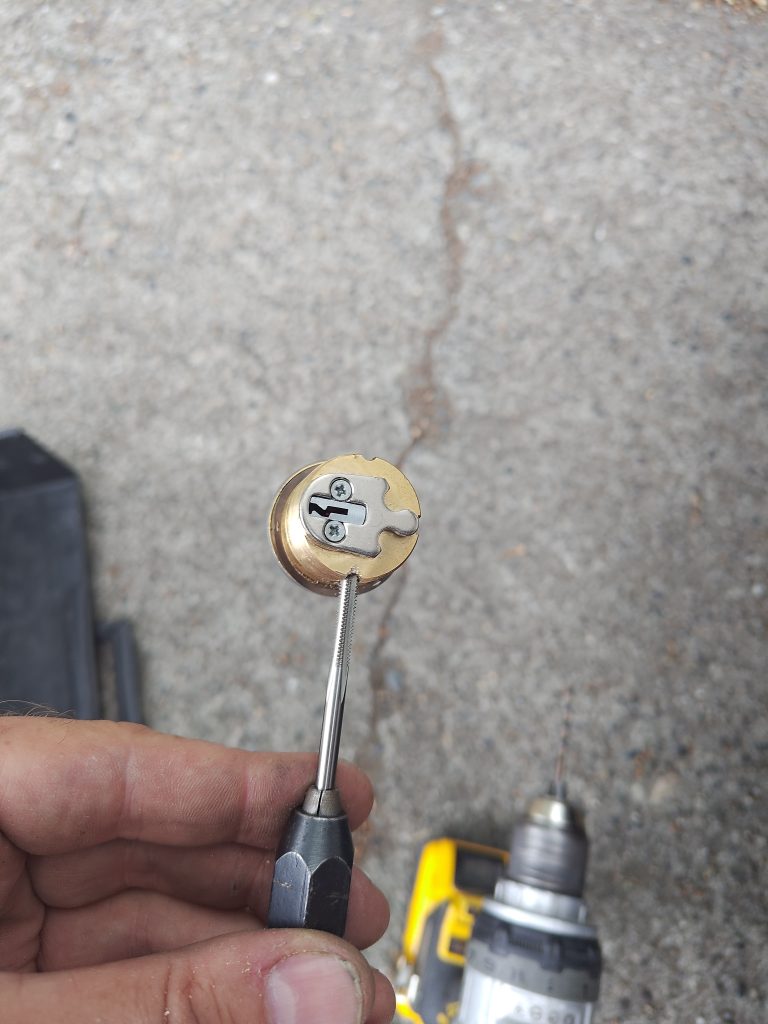
For all those hacks out there who want a cheap fix and also all my locksmith friends who need to get it secure for the night, here is the way. You can’t tighten a set screw that is missing or stripped out, but as long as the threads on the cylinder and the lock are intact you can do this: Screw the cylinder in, look through the hole for the set screw and mark the cylinder where the set screw would go. This mark may already exist from tightening the set screw against the cylinder. Then tap the cylinder for an appropriately sized screw, like 10-24 or 8-32. You should use a bottom tap unless you want to disassemble the lock cylinder to remove the plug, then you can use a bullet tap as long as the hole doesn’t line up with any of the chambers! Better to use a bottom tap and not drill through into the plug. You have a solid 1/4″ which is more than enough threads.
Now screw the cylinder in and screw the same diameter and threadpitch screw into the cylinder from the side. You will probably have to cut the screw to a custom length and may need to modify the head of the screw to be smaller but when the screw is tight and the head held in the side of the lock, the cylinder cannot rotate without abuse like using pliers on it.
It should be mentioned that this is probably going to invalidate the lock’s UL rating, and should be considered temporary fix only. The first painter with an impact driver is going to strip the threads out of the mortise cylinder.