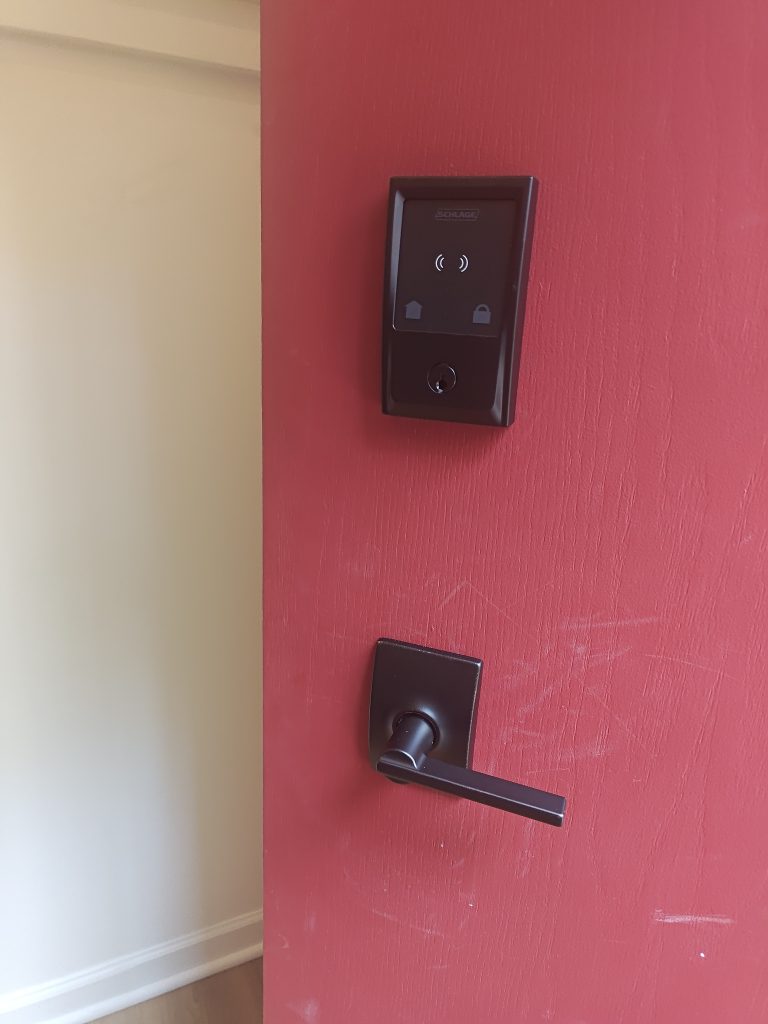
I rarely have to install a 5″ backset deadbolt. I have never had to install an electronic 5″ backset deadbolt. The common options for deadbolts are either 2-3/8″ or 2-3/4″ backset. Making one of these work with a 5″ backset deadbolt is challenging.
The easiest way to tackle this problem is to use an August deadbolt. These retrofit many common residential locks that are installed on a five inch backset. You just remove the thumbturn on the inside and then you screw the August on in its place.
A far more difficult installation is a Schlage Encode. This lock has a tailpiece that goes from horizontal to vertical when locking and vertical to horizontal when unlocking. Unfortunately the only five inch backset bolt available for Schlage deadbolts is the B600 bolt. Its timing is 45 degrees off of the encode. The tailpiece going through it must be diagonal both locked and unlocked.
The first thing to do when attempting this installation is to modify a tailpiece to be narrower. Schlage doesn’t want dimwits like me doing this sort of thing with their locks so they made the tailpiece on the Encode a very specific shape so that other tailpieces would not work without modification. You have to make the tailpiece of, say, a Schlage b60 narrower and shorter to work with the encode.
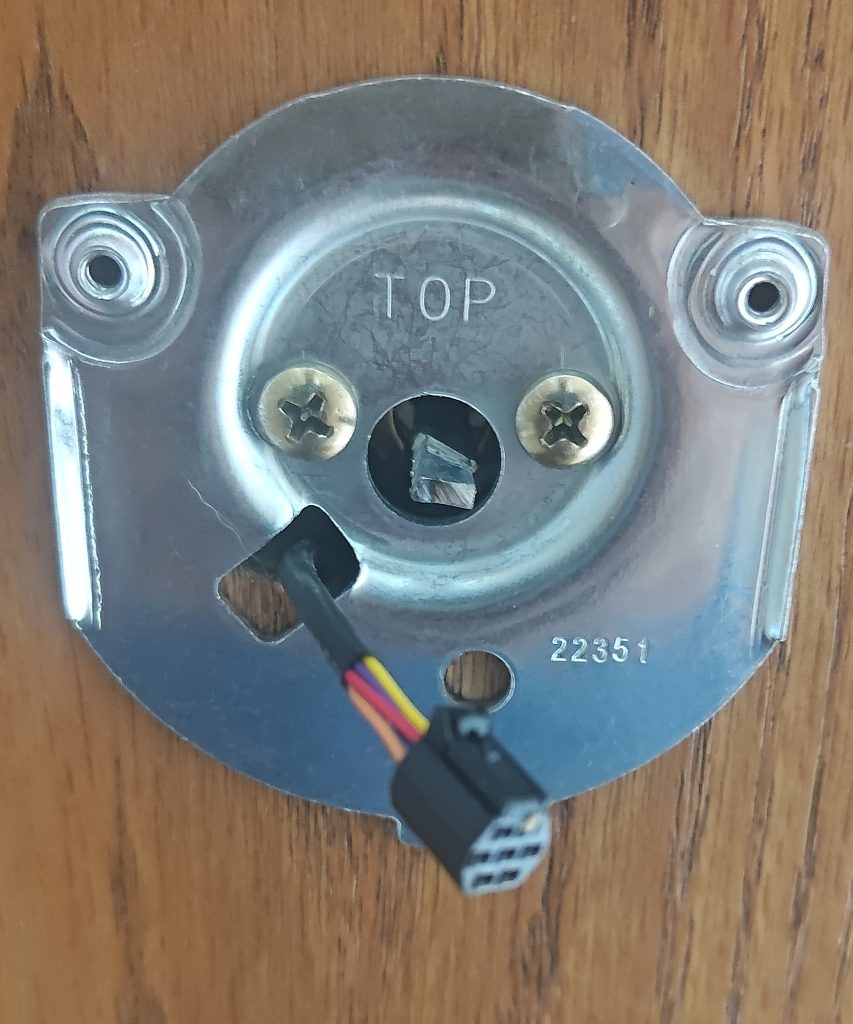
To make the Encode work correctly with a B600 bolt, we then have to bend the tailpiece 45 degrees. This must be done after inserting through the bolt. Bad things will happen if you try to shove a bent tailpiece through this bolt which costs $100 by itself. I recommend putting the tailpiece through the bolt, check to make sure the tailpiece is short enough by installing the inside part of the Encode, and then using two pairs of narrow pliers bending the tailpiece 45 degrees. One pair of pliers holding tailpiece stationary as close to the bolt as possible, the other pair turning the tailpiece 45 degrees at the tip.
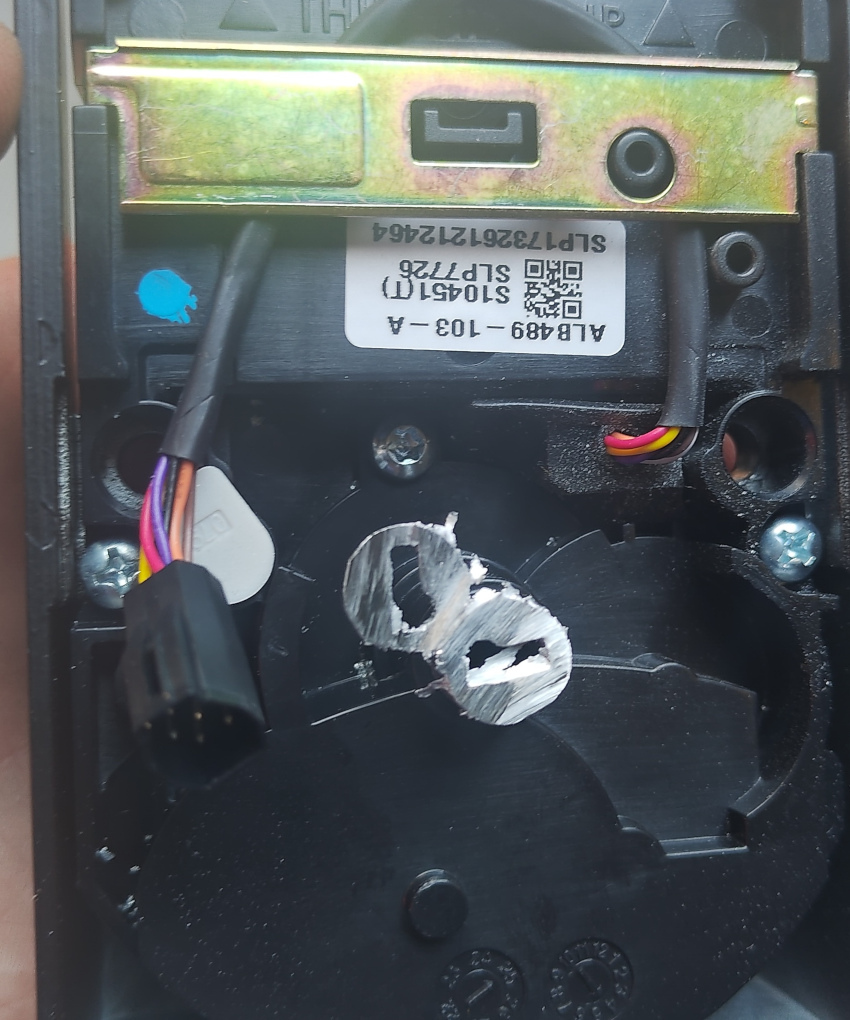
Using a B60 tailpiece is better than a GMS or Ilco tailpiece because they have breakaway slots and are weaker, they won’t tolerate this abuse as well as the Schlage original.
If all goes well the thumbturn of the Encode should now be vertical when unlocked, and horizontal when locked. The advantage of using the B600 bolt is that it is much stronger and resistant to forced entry than the standard Encode bolt. The disadvantage is that the bolt that comes with the Encode has a tapered tip so that it will work with strikes that aren’t perfectly aligned. This means that there is a very real possibility that the Encode will be unable to lock the door without pushing or pulling on the door to line it up properly. This is the most common problem DIY people have with electronic lock installs, lining the bolt up with the strike. With the standard bolt, your batteries wear out quickly. With the B600 bolt, the lock will work or it will not work.